
Best XLR Condenser Microphones for Vocal Recording in 2026 — complete guide
The best XLR condenser microphone for vocal recording in 2026 depends on the voice, room, interface, and recording goal, not on a single winner. A quiet home studio may benefit from a low-self-noise cardioid mic, while a treated professional room may justify a more sensitive or multi-pattern model. This guide compares seven options using manufacturer-published specifications and practical use cases, not invented hands-on ratings.
Prices, stock, bundles, warranties, and model names can change by country and retailer. Use the official manufacturer page as the source of truth for specifications, then verify the current seller listing before buying.
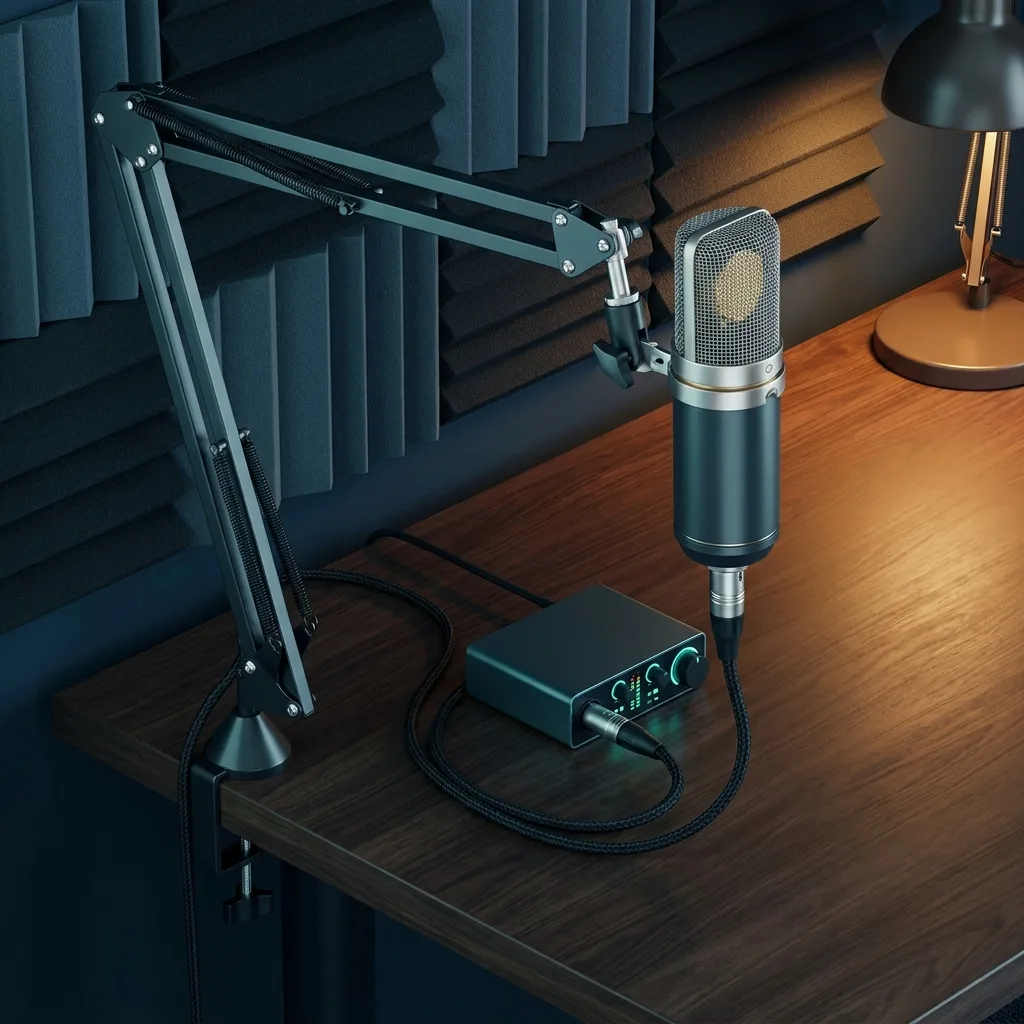
Quick Answer: Which XLR Condenser Mic Should You Choose?
- Choose the RØDE NT1 5th Generation when you want very low published self-noise plus both XLR and USB-C connectivity.
- Choose the Audio-Technica AT2035 when you need a straightforward cardioid microphone with a pad, high-pass filter, and accessible setup.
- Choose the Neumann TLM 103 when a treated room and a presence-forward cardioid sound fit your professional vocal chain.
- Choose the AKG C414 XLII when multiple polar patterns, pads, and filters matter more than a simple one-pattern setup.
- Compare the sE2200, Aston Spirit, and Warm Audio WA-47jr when you want different tonal approaches or pattern flexibility, but verify the exact current model and specification sheet.
What Makes an XLR Condenser Microphone Different?
A condenser capsule is sensitive to small changes in air pressure, which can provide detailed vocal capture. That sensitivity also means the microphone can reveal room reflections, computer fans, traffic, mouth noise, and poor gain staging. Condenser microphones are not automatically better than dynamics; they are a different tool for a different acoustic situation.
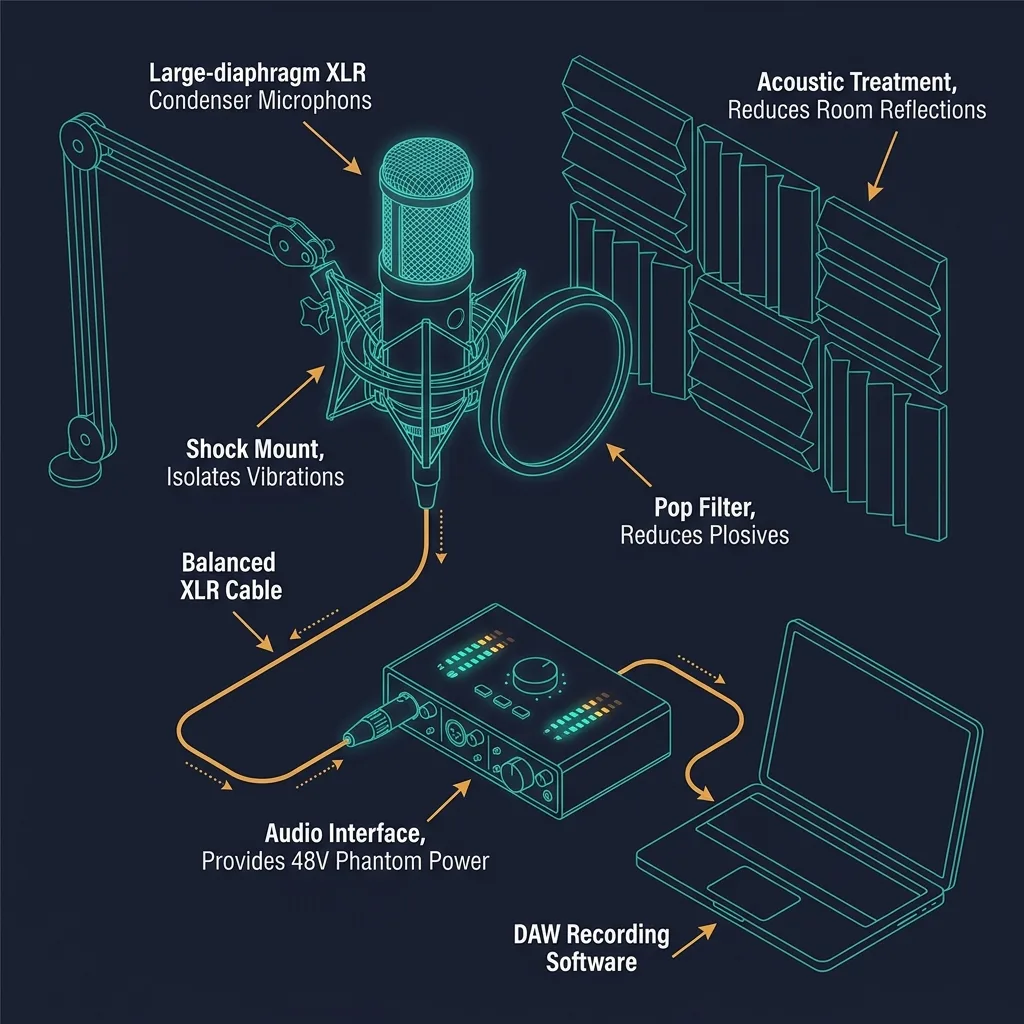
An XLR connection sends an analog signal to an interface, mixer, or preamp. Most XLR condenser microphones need 48V phantom power. USB microphones contain their own converter, while a hybrid model can provide both types of connection.
Five Buying Criteria for Vocal Recording
- Room: A quiet, treated room lets a sensitive condenser show its detail. In an untreated room, placement and absorption may matter more than price.
- Voice: A bright microphone may add definition to a dark voice but exaggerate sibilance in a bright voice. A warm or presence-forward description is a starting clue, not a guarantee.
- Self-noise: Lower published self-noise helps with quiet sources, but it does not remove fan noise, room reflections, or interface noise.
- Pattern and controls: Cardioid is simple for one vocalist. Omni, figure-8, or multiple patterns add options for ensembles, room capture, and mid-side setups.
- Chain and accessories: Budget for an interface, stand or boom, pop filter, cable, headphones, and basic room control. The microphone is only one part of the recording chain.
1. RØDE NT1 5th Generation: Flexible Low-Noise Option
The official RØDE product page lists a large-diaphragm cardioid condenser capsule, 4 dBA self-noise, XLR and USB-C Dual Connect, 32-bit float USB output, and conversion up to 192 kHz. RØDE also lists a shock mount, pop filter, and XLR and USB cables among the included accessories.
The practical advantage is flexibility: use XLR with an interface, or USB-C when a direct computer connection is more convenient. For XLR recording, its low published self-noise is useful in a quiet room. The cardioid pattern still picks up room sound from the front, so placement and acoustic control remain important.
Best fit: home studio vocals, voiceover, and creators who want both an interface-based path and a direct USB option. Check the current generation and included bundle before ordering.
2. Neumann TLM 103: Presence-Forward Professional Cardioid
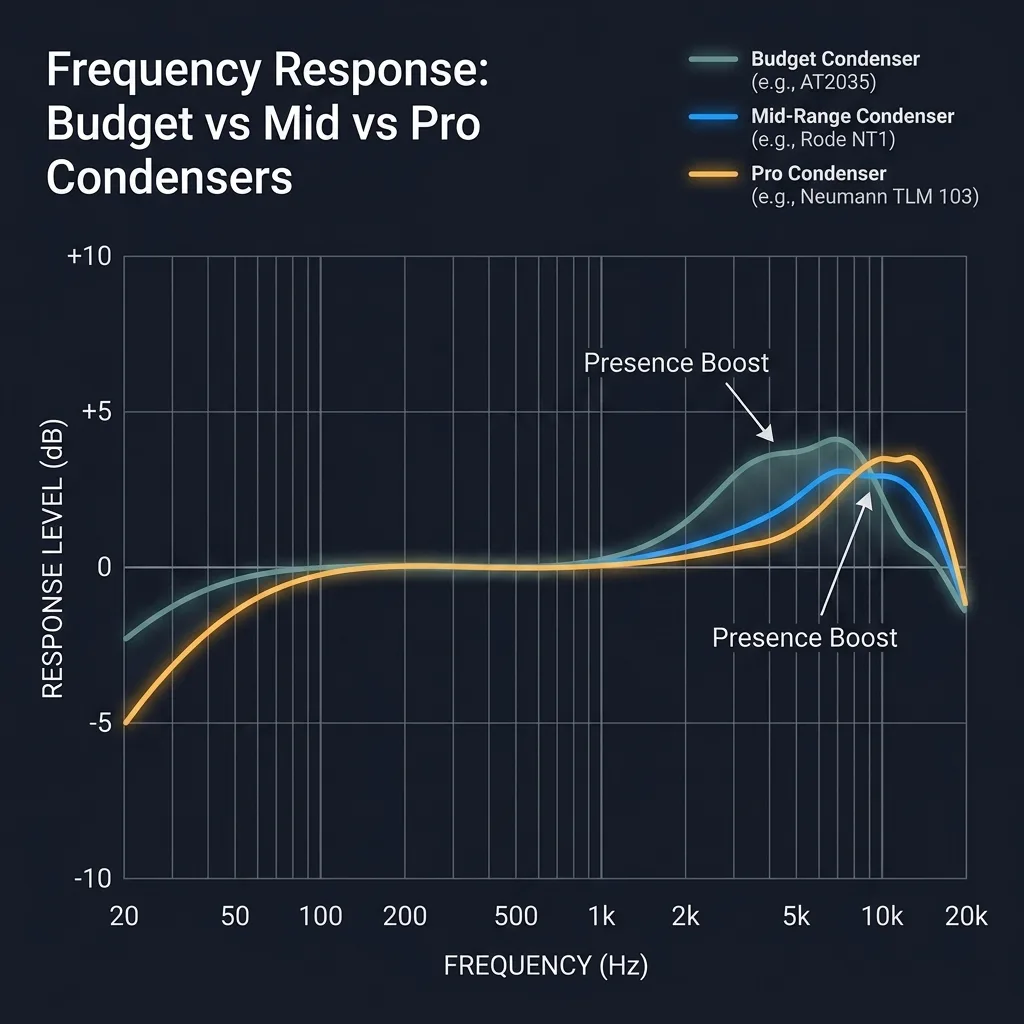
The Neumann TLM 103 product page lists a large-diaphragm cardioid condenser with a 7 dB-A equivalent noise level, 138 dB maximum SPL, 20 Hz to 20 kHz response, and a presence boost above 5 kHz. It uses an XLR connection and requires phantom power through the recording chain.
Its low self-noise and high sensitivity can work well for professional voice recording, but the presence lift may emphasize sibilance or brightness on some voices. Audition the microphone in the intended room instead of assuming that a premium model works for every vocalist.
Best fit: treated rooms, broadcast or voiceover chains, and voices that benefit from clear upper-mid and high-frequency definition.
3. Audio-Technica AT2035: Practical Budget Cardioid
The Audio-Technica AT2035 specifications list a fixed cardioid pattern, 20 Hz to 20 kHz response, 12 dB SPL noise, 148 dB maximum input level, and 158 dB with the 10 dB pad. The microphone also has a switchable 80 Hz high-pass filter and 10 dB pad, and the package includes a shock mount and pouch.
Those controls are useful for home recording: the high-pass filter can reduce some low-frequency rumble and proximity buildup, while the pad gives headroom for louder sources. It remains a sensitive cardioid condenser, so it will not hide a reflective room or noisy computer.
Best fit: first studio microphones, podcast and voiceover setups with a usable interface, and vocalists who want practical controls without a complex pattern selector.
4. AKG C414 XLII: Multi-Pattern Studio Tool
The AKG C414 XLII specifications list nine selectable polar patterns, 6 dB-A equivalent noise level, 20 Hz to 20 kHz bandwidth, three attenuation levels, three bass-cut filters, and a peak-hold overload indicator. The official page describes a presence character associated with the C12-style voicing.
Multiple patterns make the C414 XLII useful beyond one close vocal: cardioid can suit a solo singer, while other patterns can support room, ensemble, or special recording setups. More controls create more decisions, and the microphone will faithfully reveal a poor room. The XLII and XLS are different versions, so confirm which one a listing contains.
Best fit: established studios, multiple vocalists, engineers who need pattern and filter flexibility, and rooms where the extra sensitivity can be controlled.
5. sE Electronics sE2200: Cardioid With Useful Filters
The sE2200 official specifications list a cardioid true condenser capsule, 8 dB equivalent noise level, 20 Hz to 20 kHz response, 125/135/145 dB maximum SPL depending on pad setting, switchable 80 or 160 Hz low-cut filters, and -10 or -20 dB pads.
The filters and pads make the sE2200 adaptable to close vocals, acoustic instruments, and louder sources. It is still a single-pattern cardioid microphone, so it is simpler than a multi-pattern model and needs a quiet, sensible recording position.
Best fit: vocalists who want a traditional cardioid studio microphone with low-cut and pad controls, especially when the interface provides clean 48V phantom power.
6. Aston Spirit: Three Patterns and Onboard Controls
The Aston Spirit product information lists cardioid, omni, and figure-8 patterns, 14 dB A-weighted self-noise, 138 dB maximum SPL, an 80 Hz low-cut filter, -10 and -20 dB pads, and 48V phantom power. Aston also describes its transformer-balanced output and a presence lift.
The three patterns are useful when one microphone needs to cover more than a single close vocal. Figure-8 requires careful room control because the rear of the microphone is also sensitive. Treat the tonal language on a manufacturer page as a starting point and listen for sibilance and room reflections in your own setup.
Best fit: project studios that want pattern flexibility, vocalists who can control the room, and recording situations that benefit from pad and low-cut options.
7. Warm Audio WA-47jr: K47-Style Character Option
The Warm Audio WA-47jr product page describes the WA-47jr as a transformerless FET condenser built around a K47-style capsule. The standard WA-47jr has cardioid, omni, and figure-8 patterns plus a -10 dB pad and 70 Hz high-pass filter; Warm Audio also lists a separate cardioid-only WA-47jr SE variant. Confirm the exact model before comparing specifications.
The design is aimed at a character-focused studio sound, but words such as warm or vintage are not a substitute for listening. The multi-pattern version can suit vocals, instruments, and room experiments; the cardioid-only SE version is a different buying decision.
Best fit: singers and producers who want a K47-style tonal direction and pattern flexibility, provided the room and interface support the microphone.
Quick Comparison: Manufacturer Specifications
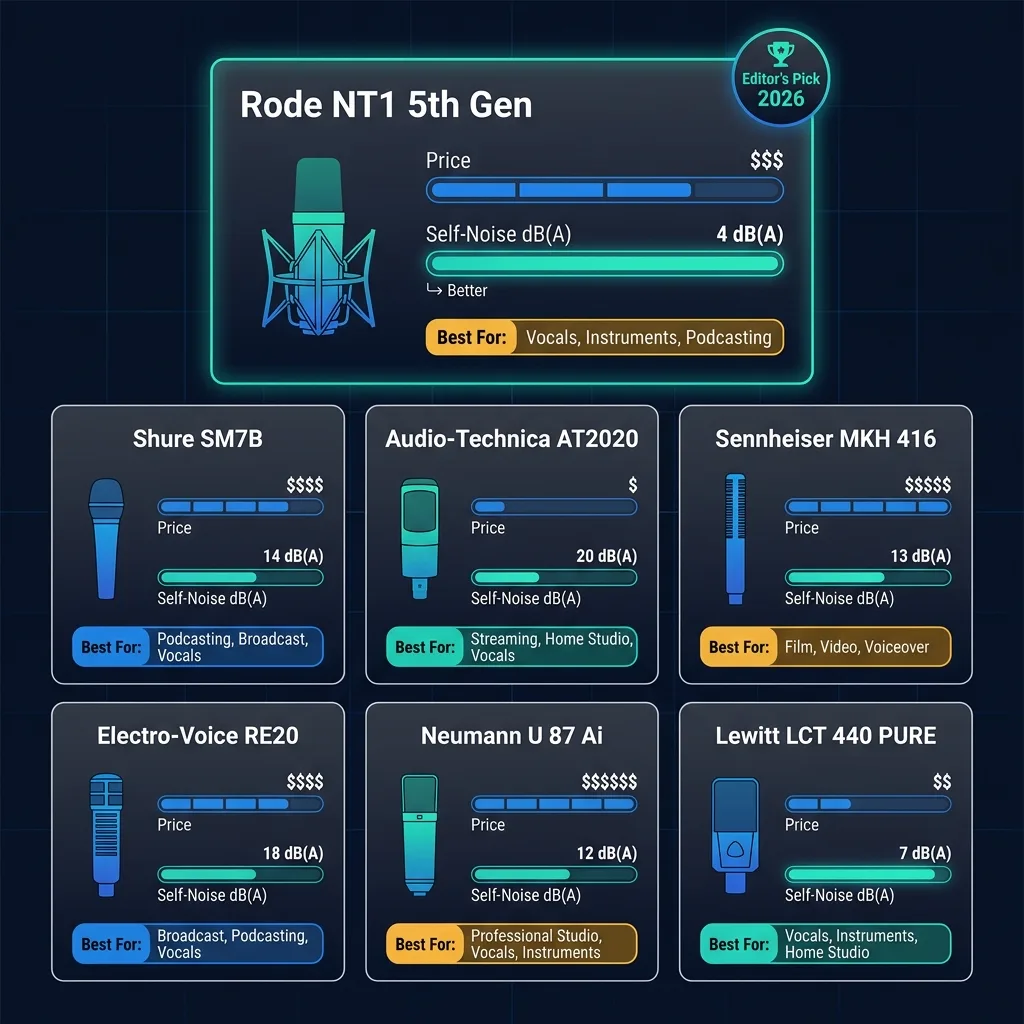
The table avoids ratings and fixed street prices because retailer pricing, bundles, measurement conventions, and stock change. Use the linked official page for the exact current specification and model version.
| Microphone | Published self-noise | Pattern | Useful controls or connection |
|---|---|---|---|
| RØDE NT1 5th Gen | 4 dBA | Cardioid | XLR and USB-C; 32-bit float USB |
| Neumann TLM 103 | 7 dB-A | Cardioid | Presence boost; 138 dB max SPL |
| Audio-Technica AT2035 | 12 dB SPL | Cardioid | 80 Hz high-pass; 10 dB pad |
| AKG C414 XLII | 6 dB-A | Nine selectable patterns | Three pads; three bass cuts |
| sE Electronics sE2200 | 8 dB(A) | Cardioid | 80/160 Hz low-cut; -10/-20 dB pad |
| Aston Spirit | 14 dB A-weighted | Cardioid, omni, figure-8 | 80 Hz low-cut; -10/-20 dB pad |
| Warm Audio WA-47jr | Check current spec sheet | Three patterns on WA-47jr | -10 dB pad; 70 Hz high-pass |
How to Choose the Right XLR Condenser Microphone
For a Quiet Home Studio
Start with a cardioid microphone and a close, consistent position. The RØDE NT1 5th Generation, AT2035, and sE2200 are practical starting points, but the best choice depends on your voice and room. Keep the front of the microphone pointed toward the speaker and the rear aimed toward the loudest unwanted source when the pattern allows it.
For a Bright or Sibilant Voice
A presence-forward microphone may make S and T sounds more prominent. Use a pop filter, move slightly off-axis, control the room, and compare microphones at matched loudness. Do not assume that a warmer product description will solve sibilance in every voice.
For a Full or Dark Voice
Extra presence can improve intelligibility, while a flatter or character-focused microphone may preserve body. The right result depends on the arrangement and distance; a small position change can be more useful than a new microphone.
For Multiple Recording Patterns
Choose a multi-pattern microphone such as the AKG C414 XLII, Aston Spirit, or multi-pattern WA-47jr only if you will use those patterns. Omni and figure-8 capture more of the room, so they are not automatically upgrades for an untreated space.
Buying Through Amazon or Another Retailer
If you buy through Amazon or another marketplace, match the exact model and generation, verify the seller and fulfilment details, check the warranty and return policy, and confirm what accessories are included. Use the manufacturer product page for specifications and the retailer listing only for current stock, delivery, and purchase terms. A marketplace price or bundle can change without changing the microphone name.
Common Buying Mistakes
Spending the microphone budget but ignoring the chain
Reserve money for a clean interface, stand or boom, pop filter, cable, headphones, and basic acoustic control. A high-end microphone in a noisy or reflective room may produce a less useful vocal than a lower-cost model placed correctly.
Assuming self-noise equals room noise
A published self-noise figure describes the microphone electronics under a stated measurement. It does not measure your computer fan, street noise, HVAC system, reflections, or preamp. Solve the loudest source first.
Choosing by a score or a video alone
Online samples are affected by room, distance, preamp, EQ, compression, voice, and playback level. Use them to shortlist options, then compare the official specs and your own recording conditions.
A Simple Test Before You Buy
Record the same short passage with the same performer, distance, pop filter, interface gain, and room position. Match the clips by loudness before judging them. Listen for consonants, sibilance, low-mid buildup, room reflections, and how much equalization the voice needs. Document the model, generation, accessories, and settings so the comparison can be repeated.
Conclusion: Match the Microphone to the Recording
The right XLR condenser microphone is the one that matches your voice, room, interface, and workflow. The RØDE NT1 5th Generation is flexible and very quiet on paper; the AT2035 is a practical cardioid starting point; the TLM 103 and C414 XLII suit more deliberate studio chains; and the sE2200, Aston Spirit, and WA-47jr offer different control and tonal directions.
For the next part of the workflow, use our guide to remove background noise without making a voice robotic or learn how to balance two podcast speakers.
Transparent Disclosure: The author is the Founder of Audio Forge Pro. Recommendations reflect genuine relevance to this topic. Core audio processing is free with no login required.
Responses
Join the community discussion. Sign in with Google to post a comment after the page finishes loading.